The impact of the menstrual cycle and menopause at work, measured

• Lower staff turnover
• Hidden absence made visible
• Openness in the workplace
• Managers who know what to do
• Figures you can steer by


How the daily lives of many women are affected during menstruation and menopause

Imagine starting your day at work, not feeling quite like yourself. Your energy is low, focusing is a challenge, and deep down, you wish you could just head back home. This is the reality for many women during their menstrual cycle. It's a soft whisper from our bodies, often ignored, yet calling for understanding and acknowledgment in our professional environments.


Now, you might wonder, "Why is this important to discuss in our organization?" Ignoring the menstrual cycle doesn't just affect the individual; it impacts the entire company. We're talking about increased absenteeism, reduced productivity, and heightened stress levels in the workplace. It's essential to bring this into our conversations, not as a taboo but as a vital aspect of our collective well-being.


But here's the good news. By acknowledging and accommodating women's cycles, we can avoid these issues. Imagine a workplace with less sickness absence, higher productivity, and a more positive atmosphere. You're probably asking,

So you are wondering: how? By following four steps.
Step one

First we measure what is actually happening inside your organisation.

Our anonymous scan shows what the menstrual cycle and menopause do to work. Everyone takes part, including men, younger colleagues and managers, because the gap between what management assumes is happening and what is actually measured is exactly what makes the conversation sharp.

It takes five minutes and works on a phone. No name, email address or IP address is stored with the answers, and you distribute the scan yourself from your own records, so we never see a list of addresses.

What comes out are figures a board can act on. How many productive days are lost each year, what share of absence is reported under a different heading, what share of women going through menopause is considering reducing their hours or leaving, and which measures your own employees name as the ones that would genuinely make a difference. Two weeks later we go through the report with your board in an hour, including the steps to take in the short and longer term.

Step two

Next we bring the knowledge inside, to employees and to management. Knowledge is power, and in this case understanding and empathy as well. We do this with on-site workshops covering both the cycle and menopause, and with an online programme that reaches everyone who was not in the room.

Step three

A workshop reaches the people in the room. After that comes the education that reaches everyone, including the colleagues who join next year. Our online programme runs for five days, ten minutes a day, on their own phone, with a separate module for managers. And for anyone who finds that symptoms persist, there is a personal consultation with a cycle therapist or menopause practitioner from our network, entirely outside the employer. What an employee fills in or discusses never reaches the employer.

Step four

After twelve months we measure again, using the same questions. That is when you see what has actually changed: whether hidden absence has gone down, whether employees now dare to raise it with their manager, and whether the women who were considering reducing their hours still feel the same way. One measurement shows you what is going on. Two measurements show you what your policy has delivered, and that is the only thing you can put in front of your board or your shareholders.
Invloed menstruatie en overgang

This isn't just about women. Men play a crucial role in this process. By understanding more about the phases of the cycle, they can provide support where necessary.

Imagine walking a mile in someone else's shoes, feeling what they feel, understanding their discomfort on a level words could never fully capture. That's the essence of the Men-struation challenge we've developed. It's not just about empathy; it's about connection, about truly grasping what many women experience monthly.


Through this unique challenge, we've seen barriers break down and conversations open up. It's a moment of vulnerability, yes, but also one of immense learning. When men undergo the simulated experience of menstrual cramps, something shifts. There's an immediate, unspoken understanding that forms—a realization that sometimes, you don't truly know until you feel.


And so, to your female staff, HR workers, and management, I extend an invitation. Share this challenge with the men in your life, within your professional circles. Let's use this as a tool not just for empathy, but for building stronger, more understanding teams. Because when we all understand each other a little better, we create a workplace that truly feels like a community.

What is it like to present during cramps

Our goal is not only to create support for change, but also to jointly devise solutions to meet the most important needs of women around their cycle.

Workshops withimpact

What do we get in return?

Imagine walking into a workspace where every person, regardless of gender, truly understands and supports each other. Where women are less often tired, hardly experience menstrual discomfort, and everyone, including men, thrives in effectiveness, productivity, and creativity. This isn't a far-off dream but a reality we can achieve together.

Acknowledging our differences is not about creating divisions but about embracing diversity in its true form. Men and women may function differently at times, and that's perfectly fine. By supporting each other and being mindful of our unique needs, we foster a stronger, more cohesive team. This understanding paves the way for men to offer better support and for women to excel without hindrance.

So, let's embark on this journey together. By raising awareness and fostering an inclusive environment within your organization, we're not just working towards a healthier, more pleasant workplace but a more productive one for all. It's a win-win situation that benefits everyone involved. Together, we can create a space where everyone feels valued and supported.

Introduction need-to-know workshop

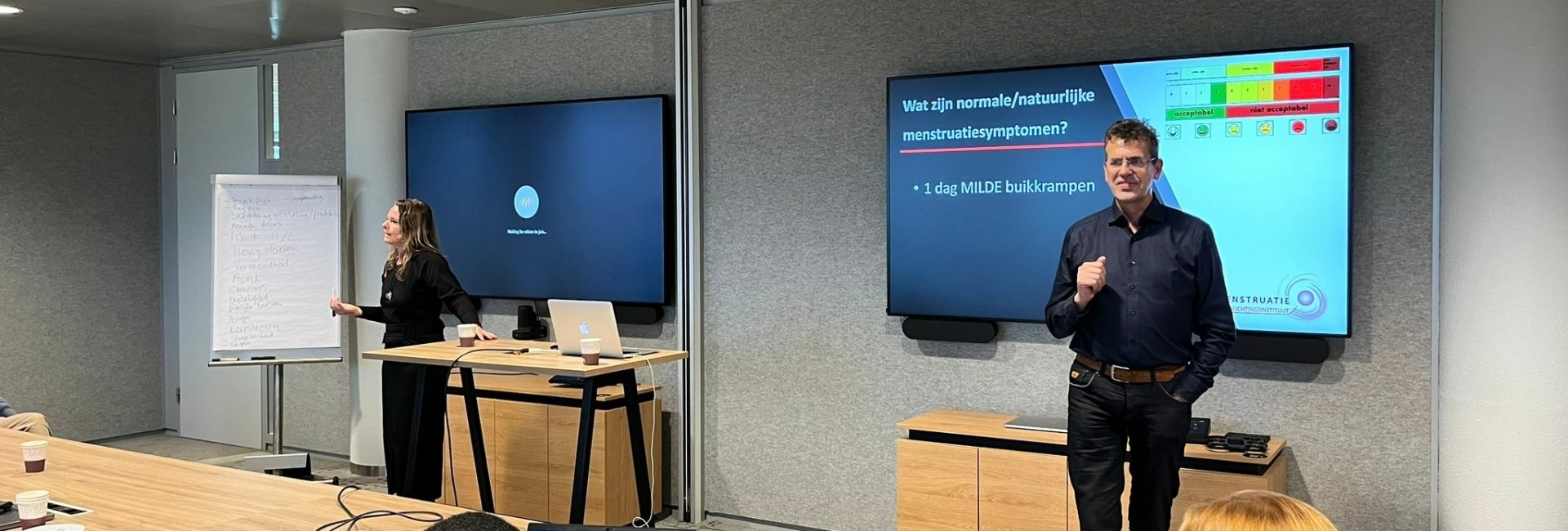
Imagine, sitting in a room, surrounded by colleagues, HR staff, and management, all gathered with a shared objective: to explore a topic that touches everyone, yet often remains under-discussed. We are here to delve into the impact of menstruation on individuals and society. This is a subject that is both natural and vital, yet frequently kept in the shadows. Today, we embark on a journey to bring it into the light, fostering an environment where learning and understanding flourish.

Discover crucial insights about the menstrual cycle. Learn about norms, deviations, and wellness strategies.

Over the next two hours, we will share crucial information about the menstrual cycle. What's considered normal? What deviates from the norm? And when should we raise our concerns? Our exploration goes beyond the basics. We will discuss the common causes of menstrual discomfort and offer strategies for women to enhance their well-being. This essential knowledge is presented in an accessible manner, ensuring everyone feels involved and informed.

But let's not forget about our men. We aim to provide insights on how they can offer support to the women around them, both in the workplace and beyond. Additionally, we offer them a unique opportunity to experience what it's like to cope with menstrual cramps. This session is more than just a workshop; it's an experience that will bring us closer, foster understanding, and break down taboos.

Company made-to-measure workshop 

A few days before the workshop we run the anonymous scan. It is built on scientific research and shows how your employees experience the impact of menstruation and menopause on their work. It takes five minutes to complete. Everyone takes part, including colleagues who have no symptoms themselves, because that reveals how large the gap is between what is assumed and what is measured. In the room, that gap is the most convincing moment of the entire day.


During the workshop, we'll collaborate to develop practical ideas on how to be more mindful of the menstrual cycle and menopause at work. We'll share tips on increasing comfort and reducing absenteeism, and we'll address stress management, an issue that affects us all. At the end of this journey, the management will receive a comprehensive report with our findings and recommendations. This is your chance for real change within your company. Let's seize this opportunity to work together towards a more supportive workplace for everyone.

Training of the Basic Caregiver for Women

Imagine walking into work, knowing that as a woman, you're not just seen as a cog in the machine, but as a whole person, with unique experiences and needs. Here, we not only focus on targets and projects but also understand and respect the natural cycles of life. It's essential, as 80% of us believe, to feel understood and supported in our workplace.


Now, you might wonder how we can make this vision a reality in your organization. The answer is closer than you think. By introducing a Basic Support Program for Women, trained individuals within your company can offer an ear, support, and guidance specifically for women at the times they need it most. This isn't just about having someone to talk to; it's about creating a network of support that understands the unique challenges we face.


Imagine the impact of such an initiative. It's not just about feeling heard and seen; it's about the tangible difference it can make in our daily lives at work. Recognizing signs, having supportive conversations, and knowing there's someone to turn to can transform our work environment into a place where we all feel truly supported. Let's take this step together, towards a more inclusive and understanding workplace.

From a doctor's point of view

Book this workshop now or request more information

You only want to have a QuickScan carried out within the company? That is possible of course 

Intake interview at your company

We discuss the content of the scan and how the process runs. You provide three figures: the number of employees, an estimate of how many of them are women and what share of those women are 45 or older, plus the average daily employment cost. Without those figures the scan still produces percentages, but no amount in euros.

Sending out the scan

You receive a link with your own company code and distribute it yourself, from your own records, by email or through your intranet. That way your staff data stays with you. If you want extra assurance that only your own employees take part, we supply single-use access codes that say nothing about any individual.

Answers to the questions

The answers are completely anonymous. No name, email address or IP address is stored with the answers, and no analytics or tracking cookies are used. The timestamp is rounded to the day, so no one can be identified from the order in which people responded.

Close the QuickScan

After the agreed period, usually two weeks, we close the scan. A participation rate of forty percent gives a reliable picture; above sixty percent the picture becomes strong.

Analysis

We analyse the data and turn it into a tailored report. No report is produced while there are fewer than eight responses, and a breakdown by department, age or role is only shown when that group has five or more people in it. That is not a courtesy, it is the core of the anonymity promise, because in a small team a combination of characteristics can be traced back to one person within minutes.

Discussing the report

Once the report is ready we come and go through the findings with you, with concrete next steps within four weeks, within six months and structurally. A repeat measurement after twelve months shows what has actually changed.

Quickscan

Request a workshop and/or quick scan

Workshop SAP

Workshop FNV

Companies and institutions where we have provided workshops.

This is a great AI invitation you can share

Disclaimer: "The content on this website is intended for educational purposes and does not provide medical diagnosis, treatment, or advice. For menstrual or menopausal complaints, consult a general practitioner or specialist. We are not medical professionals, and our services do not replace professional care."